

Let the poor breeve!
There’s a new solar law for the rich. Also, the government wants you to cook clean and go broke; Thailand is giving us rice; and Senators want to remain in office forever.

Good morning, Big Brains. Don’t come for me, but it was only last week that I found out that Nigeria didn’t qualify for the World Cup. In the meantime, I’m inching closer and closer to my project defence, and I’m so excited. Let’s get into it.
- Orame
Word count: 2,390 words
Reading time: 12 mins
In the madhouse that is Nigeria, many things go down within the week, and it can be difficult to grasp them all. This edition of The Big Daily newsletter cuts through the noise and sifts through the debris to bring you the four biggest news stories that shaped the week.
Let’s get into this week’s Big-4:
Nigeria’s new solar law won’t do much for the poor
Thailand is feeding us because bandits own our farmlands
The government wants you to cook clean with empty pockets
The Senate wants to play a fast one on us
Nigeria’s new solar law won’t do much for the poor

If you have spare ₦59 million burning a hole in your pocket, congratulations! You are the target audience for Nigeria’s newest electricity framework. The rest of us will continue using our hand fans.
On Thursday, June 4, the Nigerian Electricity Regulatory Commission (NERC) launched the Net Billing Regulations 2026, creating a framework for “prosumers” (customers who both consume and produce electricity) to sell excess solar power back into the national grid.
Eligible participants must have solar systems ranging from 50 kilowatt-peak (kWp) to 1.5 megawatt-peak (MWp). The range specifically targets mid- to large-sized commercial and industrial customers, like factories, shopping complexes, and office campuses.
If you’re wondering how much the NERC is willing to pay per unit, you might want to hold your horses because they don’t have a rate yet. NERC says it would approve rates as the programme develops.
The thing is, the success of this scheme ultimately depends on how much NERC allows Prosumers to earn per unit of electricity exported. If the tariff is too low, many may decide the extra money isn’t worth it. Unless (and we’re reaching here), they’re inspired to be patriotic.
We’re not haters, so we’ll assume NERC gets the pricing right. Even then, there’d still be a big problem: most Nigerians can’t even get through the front door. Industry estimates put the cost of a commercial 50kWp solar installation at between ₦59 million and ₦160 million.
The programme is currently designed for commercial and industrial users, not ordinary households. If it eventually becomes open for all, affordability remains a brick wall. With the minimum wage being ₦70,000 per month, and millions struggling to afford basic necessities, the average Nigerian isn’t becoming a prosumer anytime soon. Businesses and higher-income households may be able to afford them, but certainly not everyday Nigerians.
Not to be those guys, but NERC also doesn’t get a cookie for this new scheme; it didn’t invent anything new. If anything, Nigeria is actually late to the party. Countries such as Ghana and South Africa have operated various net-metering and feed-in schemes for some time, allowing consumers to earn credits for extra renewable electricity fed into the grid. Nigeria has been having the same conversation, about prosumers and distributed generation, for nearly a decade, while businesses quietly built their own mini-grids and generator farms and got on with it.
Even if more businesses install solar, Nigeria’s electricity crisis may likely persist because it isn’t simply a generation problem. The country still struggles to deliver power through a weak grid and financially distressed Distribution Companies (DisCos). The national grid’s available capacity rarely exceeds 5,000 megawatts nationwide. The DisCos, which would be required to sign net billing agreements with prosumers, are the same entities that lost ₦159 billion to collection failures in the first three months of 2026. These are the same institutions that many Nigerians have blamed for decades of unreliable electricity supply.
To participate, businesses must apply to their local distribution company for a technical feasibility assessment, meaning those same DisCos hold the gate. If they drag their feet, as they are historically inclined to do with anything that doesn’t directly fill their pockets, the entire scheme stalls.
If this framework succeeds, it reduces businesses’ energy costs, which in turn lowers the prices of goods and services. That’s a benefit for Nigerians, but it is not a power-sector fix. It is a relief valve for businesses. Nigerians who can’t afford solar, who survive on the grid’s increasingly random supply, who are not among the clients that DisCos will happily sign agreements with, are not the target audience this law was written for.
The Net Billing Regulations may increase the amount of electricity available on the grid, reduce reliance on generators, and encourage the use of solar energy. It may also help businesses get more value from their solar investments, but in a country where most citizens can’t afford three square meals, solar panels are a luxury; they still need a functioning power system. Nigerians don’t just need new ways to generate power; they also need a government that can reliably deliver it.
Thailand is feeding us because bandits own our farmlands

If you’ve ever had a security man who was supposed to protect your house but spent most of his time sleeping, you won’t be surprised if your house gets robbed. Nigeria’s farmers have been losing their farms to bandits and herders for years, and the bill for that misfortune just arrived: $2.34 billion in imported food, and a care package of rice from Thailand.
Thailand’s Ambassador to Nigeria, Mr Thirapath Mongkolnavin, presented 12 metric tonnes of rice, worth $22,000, in Abuja on Friday, June 5, channelling it through the World Food Programme for distribution to internally displaced persons in Borno, Adamawa, and Yobe states.
This comes as the Central Bank of Nigeria (CBN) data shows that Nigeria’s food import bill stood at $2.34 billion in 2025. A 2026 PwC analysis projects that as many as 34.7 million Nigerians could face acute food insecurity this year.
Farmers who control food production in the country called out the reason for the high import bill and the low local production. On Sunday, June 7, the General Secretary of the All Farmers Association of Nigeria (AFAN), Mr Femi Oke, told the News Agency of Nigeria (NAN) that the continued importation of food crops that Nigeria can produce domestically actively undermines farming.
Agricultural communication expert Dr Ismail Olawale approached the hunger crisis from a different angle. He said that many rural food-producing communities are now too dangerous to farm. Bandits and armed herders have driven farmers off their land across various parts of the country. The Poultry Association of Nigeria’s national publicity secretary, Mr Godwin Egbebe, corroborated this.
The government has not been stingy with agricultural programme announcements. Since the return to democracy in 1999, Nigeria has poured billions of naira into schemes with names longer than their lifespans: the Agricultural Transformation Agenda, the Anchor Borrowers’ Programme of 2015, the National Food Security Council, and various emergency food intervention funds.
The Buhari administration alone disbursed over ₦1 trillion through the Anchor Borrowers’ Programme. Nigerians consume 7.6 million metric tonnes of rice each year. However, local production falls short by between two million and three million metric tonnes. This is then covered by imports, which in turn cause a 50kg bag of rice to cost between ₦53,000 and ₦82,000, depending on where you live.
This rice donation from Thailand is a huge embarrassment, and that’s us being mild. After decades of intervention programmes, billions in budgetary allocations, and countless ministerial promises, the country still cannot feed its own people or protect the farmers who produce its food.
The answer to Nigeria’s food crisis is not only seed distribution schemes or World Bank-funded projects. Those are great, but fixing the country’s insecurity crisis is where it’s at.
Every farmer pushed off their land by terrorists is a testament to the government’s epic failure, and ordinary Nigerians will continue bearing the brunt, no matter how many bags of rice donations we get.
New here? Subscribe to become a Big Brain
The government wants you to cook clean with empty pockets
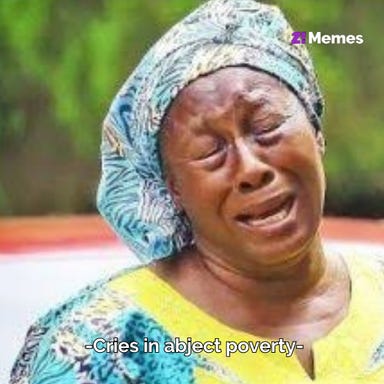
On Tuesday, June 9, at an event in Abeokuta celebrating World Environment Day, Ogun State distributed 3,500 clean cookstoves to residents. The State’s First Lady, Bamidele Abiodun, made an appeal for households to move away from firewood and charcoal toward Liquified Petroleum Gas (LPG) and other clean cooking fuels.
That same week, cooking gas was hovering at ₦2,500 per kilogram (kg) nationwide. A 12.5kg cylinder refill now costs approximately ₦31,250. In Lagos, a resident of Agege told BusinessDay that she had returned to charcoal. In Akure, Ondo State, a retailer began selling charcoal alongside cooking gas because customers couldn’t afford to fill a full cooking gas cylinder. In their own words: “Many Akure residents now buy charcoal to make up for the shortfall in the quantity of gas they can afford.”
Data from the Nigerian Upstream Petroleum Regulatory Commission shows that in the first two months of 2026, 62 per cent of Nigeria’s total gas output was exported.
The Nigerian Association of Liquefied Petroleum Gas Marketers (NALPGM) has recently issued formal warnings to the Ministry of Petroleum Resources, stating that its members are paying between ₦25.2 million and ₦26.2 million for a 20-metric-tonne consignment of cooking gas and are passing those costs on to consumers in the retail price.
The government says Nigerians should switch to cleaner fuels like LPG, but they’re not helping them get there. International buyers pay in dollars, Nigerian buyers don’t. So when producers have to choose where their gas goes, the export market often wins.
The Nigerian government’s National Gas Expansion Programme (NGEP) was launched in 2020 to increase access to cooking gas and accelerate LPG adoption nationwide. Nearly a decade later, national consumption of cooking gas rose by 20% to 1.8 million metric tonnes in 2026, but supply remained at 1.55–1.65 million metric tonnes over the same period.
Handing out 3,500 stoves while gas is ₦2,500 per kilogram is not a clean energy policy. You cannot push households toward LPG with one hand while your export regime prices them out of it with the other. The people who will bear the consequences are the people who spend hours around charcoal fires and firewood.
If the government is serious about clean cooking, it must rebalance its gas export and domestic supply priorities, invest in midstream distribution infrastructure, and stop pretending that token stove distributions cancel out a structural supply failure.
Don't gatekeep. Share this with a future Big Brain.
The Senate wants to play a fast one on us
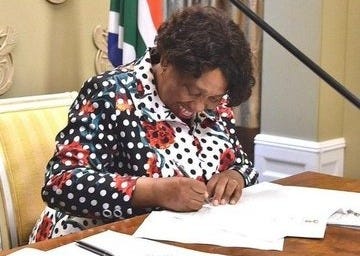
If you think the problem with Nigerian governance was insecurity, bad infrastructure, or economic inflation, a certain senator wants you to know that you’re wrong, and the actual issue is that elections happen too often.
On Tuesday, June 9, Senate Leader Opeyemi Bamidele announced plans to sponsor a bill to replace Nigeria’s current two-term system with a single six-year term.
He intends to introduce it as one of his first bills when the 11th Senate convenes after the 2027 elections. Bamidele found this pressing because, according to him, elected officials spend the first half of their tenure plotting re-election rather than governing. His genius idea to fix this is not a knock on the head for his silly colleagues, but a single, longer-term solution that allows them to focus.
“If you know you are there for six years, only one tenure, you put in your best from day one,” Bamidele said. “You know this is the only chance that you have,” he continued.
As ridiculous as it sounds, this idea is not new; it surfaces in Nigeria every few years, like a recurring fever. Former Vice Presidential candidate Atiku Abubakar included a version of it in his 2023 policy proposals. It was proposed during the Jonathan-era constitutional review and also discussed under Obasanjo.
It has been debated, shelved, and rediscovered by a rotating cast of politicians who believe the problem with Nigerian governance is the length of the calendar, not the character of the people governing. In all those years, not one administration that could have governed brilliantly in a single term actually did.
The current system, whatever its flaws, gives voters the power to remove an underperforming leader after four years. A six-year single term removes that check entirely. A governor who performs terribly in year two has four more years of guaranteed office. That is a governance insurance policy — for the governor.
Some individuals may argue in good faith for tenure restructuring, but the timing, the context, and who it’s coming from matter. This bill is being proposed by the Senate Leader of the ruling party, with the hope of introducing it after the 2027 elections, which Tinubu’s APC is expected to contest. That context does not make the proposal automatically corrupt, but we are side-eyeing it like mad.
What Nigerians are owed right now is action on the insecurity killing their farmers, the gas prices forcing them back to charcoal, and the grid that still can’t reliably power a fan.
Every hour spent debating constitutional tenure adjustments is an hour not spent on the governance failures that make tenure irrelevant in the first place. If you spend six years doing nothing, it doesn’t matter that you can’t run again.
Your Next Big Read
→ “Our Government Abandoned My Scholarship Midway. Now I Teach Russian Kids To Survive” — Abroad Life: Kelechi (21) left Nigeria at the end of 2023 on a fully funded scholarship to study medicine in Moscow, only for it to be discontinued. In this story, he compares life in Russia to Nigeria and shares how he makes ends meet after being left financially stranded by the Nigerian government.
→ She Dropped Out of School in Her 3rd Year and Got a Skilled Worker Visa to the UK — 1000 Ways to Japa: Folake* (22) left Nigeria in November 2023, one year before completing her Mass Communication degree, to move to the UK on a skilled worker visa. In this story, she tells us how she moved with her family, how she got the care job and the reasons she left in the first place.
The Big Picks
→ Grenada opens visa-free access to Nigerian entrepreneurs, professionals: Entrepreneurs, investors, and professionals in Nigeria are set to gain easier access to the Caribbean following Grenada’s decision to grant visa-free entry to Nigerians as part of efforts to deepen economic and business ties between both countries.
→ FG’s survey shows 83.4% of Nigerians want social media restriction for children: A survey by the Ministry of Communications, Innovation, and Digital Economy has revealed that 83.4% of Nigerians support social media restriction to protect children.
Take a Quiz Before You Leave
GridLocked: Can You Guess The Company?
Share your results and tag us on social media.
Play Catch-Up
Borrow borrow make me shine

Good morning, Big Brains. Happy new month. I don’t know about you, but I’m already counting down to the Naira Life Conference. All the cool kids and future rich uncles and aunties will be there.