

Borrow borrow make me shine
This government is addicted to borrowing. Also, transport is becoming a luxury; Nigeria is still fighting dirty water in 2026, and Ebola has entered the chat

Good morning, Big Brains. Happy new month. I don’t know about you, but I’m already counting down to the Naira Life Conference. All the cool kids and future rich uncles and aunties will be there.
If you’re trying to figure out how to make your money work harder than you do, grab an early bird ticket here. Don’t say I did nothing for you. 😌 Let’s get into it.
- Orame
Word count: 1,942
Reading time: 10 minutes
In the madhouse that is Nigeria, many things go down within the week, and it can be difficult to grasp them all. This edition of The Big Daily newsletter cuts through the noise and sifts through the debris to bring you the four biggest news stories that shaped the week.
Let’s get into this week’s Big-4:
The government keeps borrowing to pay back debts
Nigerians are dying from dirty water in 2026
Travelling in Nigeria is getting more expensive
Ebola might be coming to a city near you
The government keeps borrowing to pay back debts

Nigeria and borrowing are starting to look like that toxic relationship your friends keep telling you to leave. Every year, there’s a promise that this time things will be different, but it’s never the case. Nigeria has borrowed almost ₦12 trillion, and somehow, most of the money didn’t go into building the things we’re supposedly borrowing for in the first place.
Data from the 2025 third-quarter Budget Implementation Report shows that the Federal Government borrowed ₦11.89 trillion in the first nine months of 2025. But only ₦3.1 trillion of that money was allocated to capital projects, such as road and power infrastructure. The remaining ₦8.79 trillion was spent on running the government: salaries, overheads, and debt repayments.
This means that Nigeria is borrowing money to cover its cost of existence. Not to build or fix anything.
Sadly, this has been going on for a while. Since 2020, a good portion of Nigeria’s borrowing has gone into routine expenses rather than capital investment. In 2020, the Federal Government’s recurrent spending was so high that even after collecting ₦4.04 trillion in revenue, it still had a ₦3.95 trillion gap and, once again, it borrowed to fill it.
In 2022, debt service alone hit ₦5.65 trillion, nearly three times that year’s capital expenditure of ₦1.89 trillion. By 2023, Nairametrics reported that debt service was running at almost four times capital expenditure in the first nine months of the year.
By 2024, the situation had become so dire that Nigeria’s debt repayments exceeded both its recurrent and capital expenditures combined. The International Monetary Fund’s (IMF) benchmark for sustainable debt service is 23% of revenue. Nigeria’s ratio has not been anywhere near that in years. It was 99% in Q1 2020, 97% in 2022, and 69% in 2024.
The Fiscal Responsibility Act 2007 actually mandates that government borrowing be directed primarily to capital investment rather than to operational costs. The government has been violating that law for years, and no one has been held accountable.
Every naira borrowed by the Federal Government will be paid back through taxes. That means every Nigerian, including those who can’t afford food due to rising costs, is on the hook for a loan that mostly funds someone’s salary in Abuja. Nigeria’s public debt increased from ₦97.34 trillion in December 2023 to ₦121.67 trillion by March 2024, and the borrowers keep borrowing.
Even the capital projects, which account for barely 50% of loan spending, have been chronically underperforming. In 2021, only 34% of budgeted capital spending was actually executed by August of that year. In 2022, execution was only 35%. The 2025 figure of 26% is the worst so far. The roads, hospitals, and power infrastructure that the loans are supposed to fund are not being built or are being built at a very slow pace.
Nigerians deserve a government that focuses on increasing revenue, managing public finances responsibly, and borrowing only when necessary to fund projects that create long-term economic value. Borrowing to cover everyday government expenses is not sustainable. Until the National Assembly introduces and enforces strict limits on borrowing for recurrent expenditure, this cycle of debt dependence will continue.
Nigerians are dying from dirty water in 2026

Some problems should’ve been left in history books. Smallpox. Polio. Dying because you drank dirty water. Yet here we are in 2026, counting cholera deaths in Borno because access to clean water remains more of a privilege than a basic service.
People get infected with cholera when they consume water or food contaminated with Vibrio cholerae bacteria. While it is treatable, it can kill you if not addressed quickly. When deaths occur because local hospitals are not close enough or equipped enough to treat sick people, every cholera death is, in that sense, a result of government failure.
A cholera outbreak in Borno State has killed 37 people and infected over 3,000 others since it began. Health workers are stretched thin across a state that has spent more than a decade dealing with the disasters of Boko Haram insurgency, mass displacement, and near-total infrastructure collapse.
These issues in Borno are not new; the state has been in a humanitarian emergency for years, and Nigeria’s water and sanitation crisis is nationwide. As Zikoko Citizen covered in our Africa Day post, a few Nigerians have reliable access to clean water, and the communities most at risk are consistently the last to receive any form of attention. The United Nations (UN) has flagged Nigeria’s water and sanitation gap as one of the most urgent public health risks on the continent.
None of that is new information to the Federal or Borno State governments. Neither is the fact that cholera outbreaks in the northeast follow a seasonal pattern, repeatedly spiking during the rainy season every year. There is no excuse for being unprepared.
What is happening in Borno is a governance disaster; the Nigerian government has had years and billions in humanitarian aid to address the water and sanitation conditions that make cholera outbreaks constant in the northeast. The fact that thousands of people are still getting infected and are dying tells you those resources did not reach the people who needed them.
State health ministries must be held legally accountable for these deaths. When a disease that is preventable by just providing clean water kills dozens in a country that has a government, a health ministry, and a budget, someone must answer for it.
Travelling in Nigeria is getting more expensive
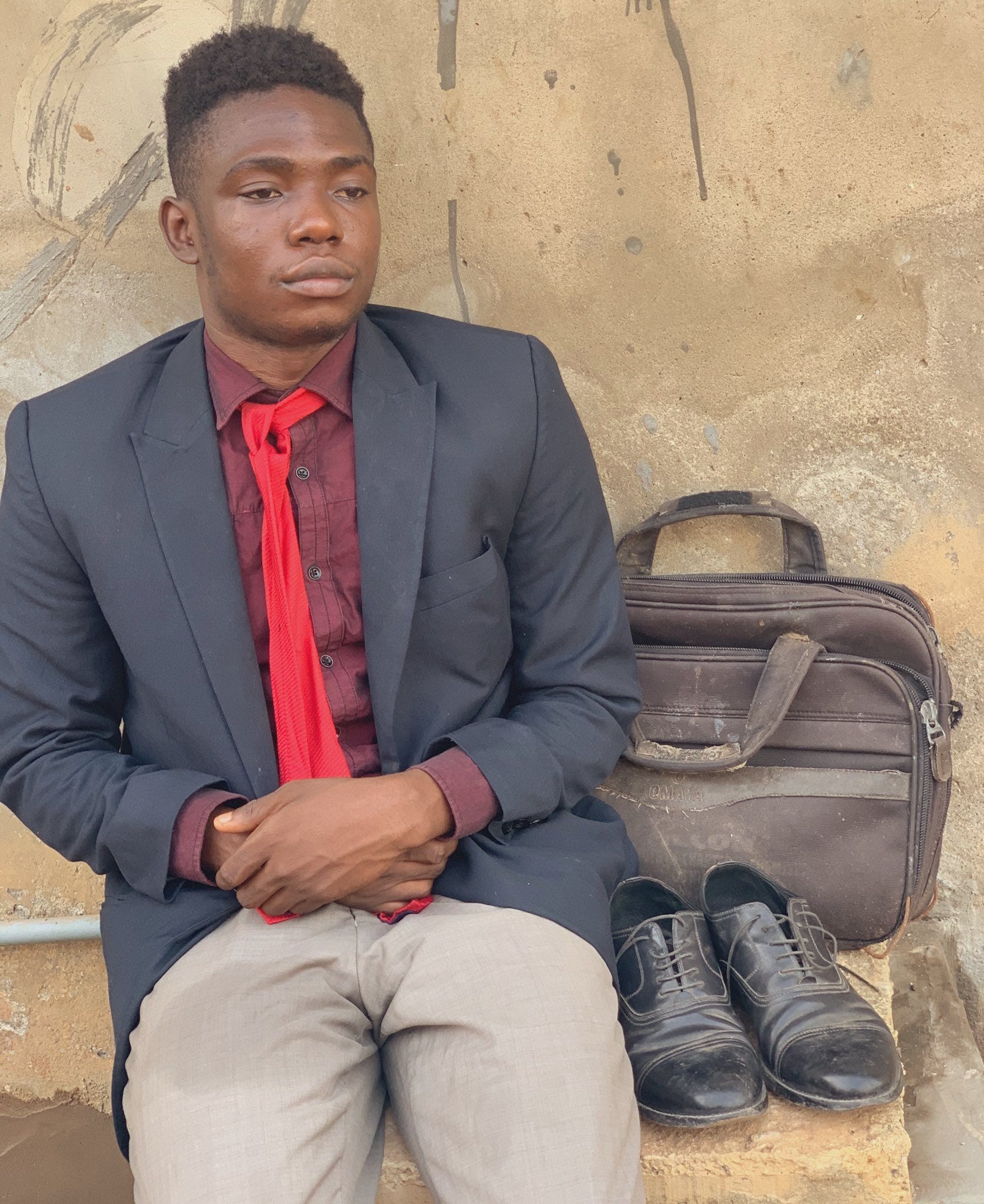
When the Federal Government removed the fuel subsidy in May 2023, they had a story ready. Yes, petrol would be more expensive and transport costs would go up. But the government was going to cushion the blow. In the words of the president, ”...just go through these baby steps of pain, baby steps of pain, I’m taking baby steps as the President…” It’s been 3 years now, and that baby is a full-grown adult, and the pain is incredibly worse.
Tinubu explicitly promised that Compressed Natural Gas (CNG) mass transit buses would be introduced, that train services would be expanded, and that ordinary Nigerians would have cheaper alternatives to the commercial buses, which are now more expensive to run.
That was the promise, and Tinubu seems to have failed to keep that promise.
According to a 2026 report from the National Bureau of Statistics (NBS), inter-city bus fares rose by 21.6% over the past year. The average passenger is now paying ₦9,607 per inter-city trip and ₦1,397.27 per intra-city trip.
For context: the national minimum wage in Nigeria is ₦70,000 per month. If a worker commutes twice a day, five days a week, they spend over ₦55,890.80 a month just to get to and from work. That is more than half their wage, gone before food, rent, or anything else.
The federal rail network remains unreliable, incomplete, and inaccessible to most people who need it. The BRT system in Lagos, the closest thing Nigeria has to functional mass transit, does not cover most of the city and does not begin to address this problem in cities like Abuja, where nothing of the sort exists.
Transport should not be a luxury. Getting to work, the market, and school are basic daily needs, so when the cost of movement rises faster than wages, people lose jobs they cannot afford to commute to, they pull children from schools that are too far to reach and eat less because transport costs have eaten up their salaries.
The fuel subsidy was removed on a promise, and Tinubu has failed to keep that promise. State governors who announced mass transit programmes and then dropped them must be held to account. Nigerians are tired of the failed promises and press releases; we want long-lasting action.
Ebola might be coming to a city near you

At this point, Nigeria doesn’t need any more plot twists. The economy is hard, the politicians are doing their thing, and everyone is just trying to survive the week. Unfortunately, Ebola doesn’t care about that and seems to be making a comeback.
The Nigeria Centre for Disease Control (NCDC) has named Lagos, Abuja, Rivers, and seven other states as high-risk areas for Ebola infestation. Health workers across these states have been put on high alert, while the NCDC is monitoring the situation in neighbouring countries, where outbreaks have created the conditions for cross-border transmission.
There is no Ebola outbreak in Nigeria right now, but there is a warning, and warnings are only useful if someone is actually listening. Nigeria has experience with Ebola. In 2014, a traveller brought the virus into Lagos, and a rapid response effort, widely credited to a combination of government action, contact tracing, and some genuine luck, contained it before it spread. That episode is often cited as a public health success story. What it actually showed is how close Nigeria came to catastrophe because of a single lapse at the border.
The question the NCDC’s alert forces us to ask is simple: are our airports and land borders actually checking people properly, or are they doing the same screening that Nigeria’s border health teams have been doing for years?
Ebola has a fatality rate of 25%-90%, depending on the strain and the quality of medical response. Nigeria’s public health infrastructure, as the cholera outbreak in Borno is demonstrating in real time, is not built to absorb a serious epidemic. Lagos alone, with its density and its international airport, would be an extraordinarily difficult city to contain an outbreak in.
The NCDC alert is a moment to demand answers. Are quarantine protocols in place at Murtala Muhammed, Nnamdi Azikiwe, and Port Harcourt international airports? Are health workers at land border crossings trained and equipped? What is the current stockpile of personal protective equipment in high-risk states?
Nigerians should be asking their state health ministries these questions now, before they need the answers urgently.
Your Next Big Read
→ He Used the Student Route to Relocate His Family Twice — 1000 Ways to Japa: In 2021, Austin (42) left Nigeria for the United Kingdom (UK) with his wife because he didn’t want to raise their two children in a country with high insecurity and low living standards. Two years later, he moved to Canada for an even better life. This is how he did it.
→ Tinubu is Driving Nigerian Students Into a Debt Trap: The government says student loans are helping poor Nigerians access education. This piece argues that after making university more expensive, Tinubu’s government is pushing young people into debt before they’ve even earned their first salary. It’s a look at how a policy sold as assistance could end up trapping a generation.
The Big Picks
Why Intelligent Women Raise Smarter Academic Children: What gives children an academic edge? According to experts, it might have less to do with the schools they attend and more with the women who raise them. This story explores the powerful role mothers play in shaping how children learn, think, and succeed.
How Wike’s aide got access to Emeka Ike’s voter details – INEC: Nyesom Wike’s aide posted Emeka Ihedioha’s voter details online, triggering concerns about data privacy in Nigeria. This story follows the trail and asks a question that should worry everyone: if a politician’s records aren’t safe, whose are?
Take a Quiz Before You Leave
GridLocked: Can You Guess The Book?
Share your results and tag us on social media.
Play Catch-Up
Terms and conditions apply

Good morning, Big Brains. Now that my exams are over, I’m building up and preparing for my project defence. The time when I finally graduate is getting closer and closer, and I can’t wait. Let’s get into it.