

Trashy advice!
Lagos can't count its trash, and Remi Tinubu wants us to count our blessings.

Dearest Big Brains,
Omo, I told myself I would lock in this week, but man plans, God laughs o. Because I have not had the opportunity to slow things down and plan out what I want to do with my work and personal life. This weekend will move mountains, sha. Because I am getting some traction, and a rest and reset would slap.
- Tezor
Word Count: ~ 915 words
Reading Time: ~ 3 mins

Today’s Big Scoop is another reminder that Nigerians are God’s strongest soldiers. We caught Lagos kinda show that its waste management is run on vibes, and Insha Allah. Oh, and Oluremi Tinubu was caught recycling the same stale advice she’s been giving us for some time now. Two sides of the same coin, apparently.
WEDNESDAY’S BIG SCOOP:
The Lagos State government is whining us with rubbish; literally
Remi Tinubu is waxing lyrical again
The Big Deal
The Lagos State government is whining us with rubbish; literally
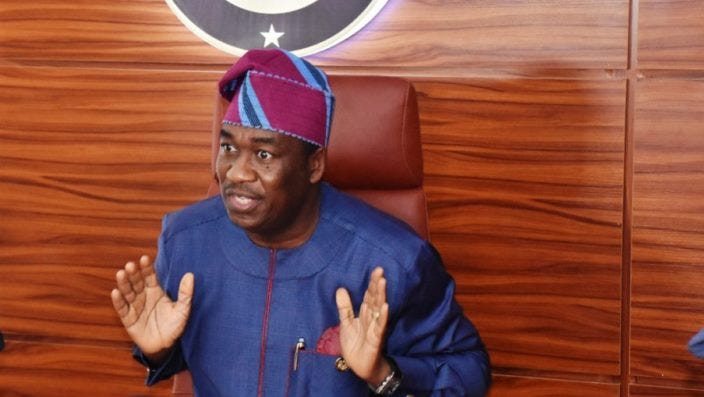
The Lagos State Deputy Governor might have been talking trash while talking about trash, because so many bits from his recent interview on Tuesday, Aug 11, 2026, don’t add up.
During a discussion on Nigerian Info 99.3FM, Lagos’ number two, Obafemi Hamzat, said that the waste wahala in the State stems from many factors, such as increased waste generation, challenges with private waste companies, and waste collection trucks basically ghosting residents due to shortages.
Omo, shey all this talk is not plenty like this?
Sure, we’ve not gotten our PhD, but we can see that the entirety of his talking points really come across as excuses, mismanagement, and data that sucks.
Hamzat said that the Lagos State Government (LASG) initially assumed the state generated 13,000 tonnes of waste, but later discovered that it was, in fact, generating 17,000 tonnes. Mad. So who made the first wrong discovery, and then the new discovery?
In the spirit of aproko, we sought out other figures and found that the Lagos State Waste Management Agency (LAWMA) put the number at 13,000 to 16,000 metric tonnes generated daily. The crazy thing is that this was reported on literally the same day that Hamzat made his statement.
Don’t clutch your pearls just yet. On Saturday, July 18th 2026, less than a month ago, the Managing Director of LAWMA, Muyiwa Gbadegesin, produced his own figures; he put the daily waste generation figures between 13,000 and 15,000 tonnes. Back in April 2025, he had put the figure at an estimated 13,000 tonnes. The statistics choke abi dem no choke?

Here’s our diagnosis: Lagosians are either growing more than Jack’s magic bean, having crazy mood swings with their refuse, or the estimates are just based on vibes.
Waste generation itself is a slow-moving number that reflects population growth, income levels, and consumption patterns. So our guess is that the estimates are all over the place, especially given Mr Deputy Governor’s miscalculations. Last last, it all boils down to one thing: ACCOUNTABILITY.
Why is this a big deal?
The good news about this apparent lack of accountability is that Lagosians don’t have to pay for their children’s swimming lessons during the rainy season, and maybe one day Nigeria will produce its own Michael Phelps.
The bad news is that, in addition to not knowing the difference between Lekki and the Lagos Lagoon these days, the dry roads are littered with assorted refuse. Public health is in trouble, soil and water are being contaminated, and the state is starting to smell like trials and tribulations.
Waste management in Lagos is such a big, big, big problem, and it is looking like it will be around for a long time. But at least they could start by being honest and accountable for the problem, instead of ascribing the blame to miscalculations. You simply cannot manage what you cannot measure; it’s not rocket science.
So call it what you want—waste o, rubbish o, refuse o—but the real garbage here might be this guesswork. And that’s on period.
Remi Tinubu is waxing lyrical again

Anytime our esteemed First Lady touches a mic, it’s poetry. Her empathy and kind words know no bounds. Be it reminding us to remain grounded in our food heritage by frying Akara, or letting us know that the solution to national hunger is backyard gardening, our mummy at the top has never failed to provide us with sound guidance and advice.
But mommy, if you advise us any further, we might have to move into Aso Rock, so you can raise us in your own image and likeness.
On Wednesday, August 12, 2026, the First Lady blessed us with some more advice for International Youth Day. In her commemorative message, she said we, the Nigerian youth, should remain focused and hardworking and pursue our dreams.
As a matter of fact, Madame First Lady has been advising us quite a lot of late, all with a similar theme of believing in ourselves and chasing our dreams.
There seems to be a pattern here, and it’s a problematic one, because the sweet motivations stand in such stark contrast to the reality of the youth she is advising.
Reports indicate a graduate oversupply and a shrinking job market. Plan International Nigeria and Action Aid Nigeria’s 2025 State of the Nigerian Youth Report 2025 also show that over 80 million Nigerian youth are unemployed, in addition to the killings and kidnappings in the country, of which the youth constitute a share.
The youth have been critically affected by the Nigerian happenings over the years. So the ‘aspire to maguire’ speeches are not really entering o, mommy. On a day when youths are supposed to reflect on their identity, individual and collective, and way forward in the country, these surface-level words of advice actually do a disservice.

This year’s International Youth Day theme is ”Different Contexts, Common Aspirations.” In a way, the joke is writing itself. We don’t know how the First Lady heard this and translated it to ”Everybody just needs to work hard.” We can assume that most youth pursue the aspiration of a happy and comfortable life, but do the youths in Nigeria have the same contexts as youths in developed countries?
Your next big read
After Her Move to Dubai, She Got a Perfect IELTS Score and Canadian PR in 4 Months - 1000 Ways to Japa: When Faith decided she wanted Canadian Permanent Residency (PR), she booked her IELTS exam, and weeks later, she received her Invitation to Apply.
In this story, she shares how she skipped the agents entirely, the exact strategy that got her PR in under four months, and the one thing she’d tell anyone drowning in online migration advice.
From Backyard Okra to Akara: A Collection of Remi Tinubu’s Bad Ideas: Many Nigerians are incredibly vexed by Remi Tinubu’s akara-selling idea. The anger is completely understandable, but honestly, nobody should be surprised at this point. Grants for roasted corn and kuli-kuli are just the latest production from the brilliant mind that brought you: Gardening to solve food insecurity, Asoebi to solve tribalism, Crowdfunding government projects.
The Big Picks
Why a Pardon Is Not Justice for Ken Saro-Wiwa: Last year, when Nigeria announced a posthumous pardon for Ken Saro-Wiwa and twelve other Ogonis, it was framed as a gesture of closure. His daughter, Noo Saro-Wiwa, does not see it that way. In this conversation, she explains why a pardon, without exoneration, cannot undo the violence of the past or resolve the political struggle her father left behind.
Why trust has become Nigeria’s next digital payments challenge: Nigeria no longer has a payments problem. It has a trust problem. That is the central argument of a new report by Bridgforte, a policy research institute, published in partnership with the United Nations Development Programme (UNDP) Innovation Hub in Lagos, which argues that confidence in Nigeria’s financial system is now determined less by how quickly money moves than by how reliably the system responds when something goes wrong.
If you love us and you’re a cool person, then take this AMAZING quiz:
QUIZ: Guess the Nigerian Song From the Situation
Did you miss yesterday’s scoop?!