

I’m falling for you
Tinubu trips while getting in bed with Türkiye, the government finally admits Tinubu almost got overthrown, Diezani might finally get her comeuppance, and Soludo is terrorising Anambra traders.

Good morning, Big Brains. At this point, it feels like we’re on the 49th day of the month. But hey, with February around the corner, it’s time to start thinking about Valentine’s. Here’s a line you’re free to steal: “I’m falling for you like Tinubu.” When it helps you bag the love of your life, don’t say I never did anything for you.
-Franklyn
Word count: ~ 2000
Reading time ~ 12 mins
In the madhouse that is Nigeria, many things go down within the week, and it can be difficult to grasp them all. This limited edition of The Big Daily newsletter cuts through the noise and sifts through the debris to bring you the four biggest news stories that shaped the week.
Let’s get into this week’s Big-4:
Tinubu tripping and falling over a multi-billion-dollar deal with Turkiye
The Federal Government finally admits there was actually a coup attempt
Diezani Alison-Madueke’s trial begins in London
Governor Soludo is punishing Anambra traders for government failures
Tinubu tripping and falling over a multi-billion dollar deal with Türkiye

Tinubu heard the saying “money for hand; back for ground” and ran with it. His trip and fall might be part of his Türkiye trip that’s getting all the attention, but that’s not the real gist. So let’s talk about the actual deal.
On January 26, Tinubu left for Turkiye, and hosts were not shy in welcoming him. Unfortunately, during the military parade staged in his honour, Tinubu tripped while walking beside the President of Turkiye, Recep Tayyip Erdogan and fell before being helped up by several men. Since then, two different stories have come out of the presidency. One version says he tripped over a poorly laid carpet. Another, from presidential spokesman Bayo Onanuga, claims he stepped on a metal object.
The fall has got everyone talking, but that’s hardly what we should be fixated on. The president’s visit came with a serious upgrade in Nigeria–Turkiye relations. Nine cooperation agreements were signed, including:
Agreement on Cooperation in the Field of Diaspora Policy
Agreement on Defence Cooperation
Joint Declaration Establishing the Economy and Trade Joint Committee
Agreement in the Field of Halal Quality Infrastructure.
Cooperation in the Field of Higher Education
Cooperation in the Field of Media and Communication
Cooperation in the Field of Education
Cooperation between the Ministries of Foreign Affairs of both countries
Cooperation between Türkiye’s Ministry of Social services and Nigeria’s Ministry of women Affairs and Social Development.
Both Tinubu and Turkiye’s president clearly think there’s plenty to gain from working closer together.
Right now, Nigeria and Turkiye trade about $2 billion worth of goods. Nigeria sends crude oil and farm produce its way, while Turkiye sells us aircraft, machinery, iron, steel, and chemicals.
Erdoğan wants that figure to jump to $5 billion, and he’s banking on these new agreements to make it happen. He also promised more military cooperation, saying Turkiye is ready to share its experience in fighting terrorism and banditry.
It finally feels that, almost three years into his presidency, Tinubu is starting to take diplomacy seriously. Better late than never, but here’s the real issue: transparency. Nigerians deserve to know exactly what these bilateral agreements mean for us, not just vague promises of billions in trade and military cooperation.
And if the presidency can’t even give a straight story about something as simple as how the president tripped, how are we supposed to trust them to be clear and honest about billion-dollar deals with Turkiye? The presidency has blamed both a poorly laid carpet and a metal object for Tinubu’s fall.
If they’re fumbling the small stuff, what happens when it comes to the big things that actually affect our lives? If they can’t keep their story straight about a fall, how can they be trusted to be clear and transparent about the fine print in these foreign deals?
Before we continue with all the goings-on in Nigeria, we need to tell you about something very exciting: The Citizen Townhall.
The Citizen Townhall is Zikoko Citizen’s flagship event, organised in partnership with Luminate and Open Society Foundation. It’s a platform to bring together young people, changemakers, industry experts, and other stakeholders to discuss the pivotal role of young people in democracy and development.

Politics affects your life every day and in so many ways. And you should have a say in who gets to decide things that affect you. At the second edition of The Citizen Townhall, we’ll be answering the big question: Who gets to shape our lives and what can we do about it?
February 28, in Lagos, there won’t be a more important place to be. Come through and join the conversation. Register here.
Now, back to the biggest stories of the week.
The Federal Government finally admits there was actually a coup attempt
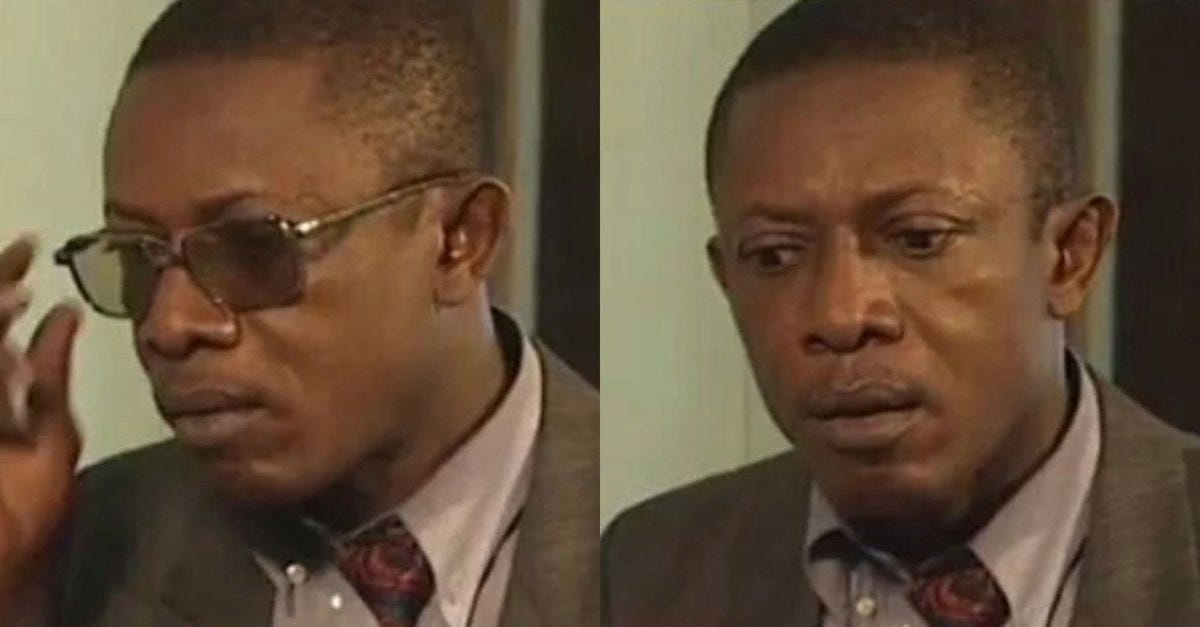
The federal government under Tinubu seems very committed to making Nigerians distrust it. Every time there’s a chance to engage the public honestly, this government somehow chooses denial. And when the truth eventually comes out, it chips away at whatever trust is left.
On January 26, 2026, the Nigerian military announced it was charging 16 officers for attempting a coup. Major General Samaila Uba, Director of Defence Information, said investigations had been concluded and a report forwarded to the relevant authorities. This comes after months of silence and denial.
Back in October 2025, reports surfaced that a coup attempt was the reason the Independence Day parade was cancelled. Days later, the military admitted it had arrested 16 officers. But instead of confirming the coup, the Defence Headquarters called the reports “false and misleading.” They claimed the arrests were just “a routine internal process” and told Nigerians to ignore the “falsehood being circulated by enemies of our nation.”
Now, three months later, they’ve finally admitted it did happen.
To be fair, governments sometimes withhold information to prevent panic or protect investigations. But there’s a difference between being careful and outright lying. One shows responsibility and good faith. The other destroys trust and leaves people more vulnerable to misinformation. If citizens get used to the government lying, they’ll believe even more wild stories, even when the government denies it.
Human rights lawyer Femi Falana nailed it when he told Channels Television that“People in authority must learn to take us seriously as a people.” He argued that it is unacceptable to reverse such a serious position without an apology. And he’s right.
The whole episode highlights another trend in Tinubu’s presidency: almost every move seems more about holding on to power than actual governance.
Shortly after the coup reports, Tinubu replaced the Defence chiefs. The last quarter of 2025 was terrible for Nigeria’s security. There were several mass kidnappings, and even threats from US President Donald Trump about invading Nigeria to intervene.
In such conditions, it would have made sense to sack underperforming service chiefs. But the timing suggests Tinubu only acted because his own power was threatened.
It’s ridiculous that the only thing that sparks action from the presidency is the fear of losing it. Coups don’t just appear out of thin air. They grow out of dissatisfaction with poor governance, spreading from the people to the military.
Tinubu is doing something wrong. Nigerians on the street will tell you that. And now, we know some members of the military think so, too.
Diezani Alison-Madueke’s trial begins in London
There’s always that one character in a show who somehow dodges karmic justice for season after season. From the Goodluck Jonathan years, Diezani Alison-Madueke has been that character. But it looks like her time might finally be up.
Alison-Madueke made history as the first woman to be appointed Minister of Petroleum Resources. Before that, she was also the first female Minister of Transportation. But almost as soon as Jonathan’s presidency ended in May 2015, law enforcement in Nigeria and abroad started chasing her for corruption involving mind-boggling amounts of Nigeria’s wealth.
Since leaving office, she’s been living in England, claiming she’s there for treatment for an aggressive form of cancer. British police first questioned her in October 2015 but didn’t file charges until 2023. Now, she’s finally set to face trial on six counts of bribery, beginning Monday, February 2, 2026.
Prosecutors allege that between 2010 and 2015, while serving as Petroleum Minister, she accepted “financial or other advantages” from oil industry players. These included London properties, furniture, chauffeur-driven cars, private jet flights, and $137,000 in cash. She’s also accused of receiving school fees for her son and luxury goods from Harrods and Louis Vuitton — all in exchange for government contracts.
Nigeria has been trying to claw back its wealth for years. In October 2015, officers of the Economic and Financial Crimes Commission (EFCC) raided and sealed her Abuja home. By August 2017, Nigerian courts ordered the seizure of assets linked to her corruption, including 56 houses worth $22 million, a Banana Island skyscraper valued at $37.5 million, and $21 million from her bank accounts.
Her name has popped up in bribery and money laundering cases not just in Nigeria but also in Britain, Italy, and the United States. The US Justice Department filed a civil complaint to recover about $144 million in assets tied to her. And in January 2025, the US announced plans to return $53 million of her ill-got wealth to Nigeria.
Recovering the money is important and welcome. But seeing her finally face justice matters just as much. Nigerians deserve that closure.
Governor Soludo is punishing Anambra traders for government failures

On Monday, January 26, Anambra State governor, Chukwuma Soludo, visited Onitsha Main Market, where shops were closed as traders obeyed the Monday “sit-at-home” order. These orders are imposed by secessionists protesting the continued imprisonment of Nnamdi Kanu and are often enforced with violence.
The Anambra state Commissioner of Information, Law Mefoh, said the state loses ₦8 billion every Monday because of the sit-at-home. Soludo isn’t having it anymore. He called it “economic sabotage” and ordered the entire market shut for a week as punishment.
He threatened that if traders obeyed the order again next Monday, the market would be sealed for a month, with punishments getting harsher until traders stopped staying home.
Law Mefoh insists traders no longer have to fear violence from enforcers. He said, “Anambra is safe for business; the fear factor is no longer there. Maybe in the past when this sit-at-home started, but now it is no longer an issue.”
That’s easy to say when you move around with a convoy of armed security. Since August 2021, when IPOB first imposed the sit-at-home order, over 700 people have been killed, according to SBM Intelligence. The same report estimates ₦7.6 trillion was lost in the first two years alone. The worst hit are low-income earners, many losing between 50% and 70% of their earnings.
Soludo’s approach traps these people between a rock and a hard place. Disobey the government and risk your livelihood. Disobey the enforcers and risk your life. That’s not good governance. That’s state terrorism.
After Soludo’s order, a joint task force of police, army, and other agencies reportedly secured the market and turned away traders trying to gain access. The government has security to spare when it wants to punish traders, but not to protect them from secessionist gunmen.
Gibson Okafor, a trader in Onitsha Main Market, told Channels Television that Soludo had promised them security but failed to deliver. He said they need protection not just at the market but along the routes so traders can actually get there. He said: “Everything has to be in order so that traders would have the means to reach the market. The governor promised us that — that is what I heard from them — but we haven’t seen it.”
If Soludo and his government were doing their jobs and making people feel safe, traders would confidently return to their shops. Instead, despite heavy security presence and warning gunshots, traders gathered around the market on Tuesday, January 27, to protest against Soludo’s decision.
Legal analysts have also criticised him. Lawyer and Current Affairs Analyst Maxwell Opara called it “executive recklessness” and said Soludo was violating traders’ rights to operate their businesses freely. He said, “It is an abuse of power, and should be condemned.”
The National Human Rights Commission (NHRC) has also spoken against it. The NHRC accused Soludo of carrying out a collective punishment that violates the traders’ rights to livelihood, freedom of movement, and due process.
Still, Soludo remains adamant. On Wednesday, January 28, he told journalists he would not reverse his instructions. He even threatened to revoke the shop ownership rights of anyone who disobeys. “If you are not ready to open your shop, go elsewhere. We will revoke your shop and give it to people who are willing to work, he said.
It’s unacceptable how easily Nigerian officials choose hard-handedness over genuine engagement with the people they’re supposed to lead. These reckless decisions affect lives. Nigerians need to think more deeply about whom they hand these decision-making powers to. Otherwise, we’ll keep ending up between the devil and the deep sea — just like the traders of Onitsha.
Your next big read
→His Entire Family Moved to the Netherlands With Zero Naira, and It’s All Thanks to LinkedIn— 1000 Ways To Japa: Nnamdi* (36) and his wife have always worked hard to ensure the comfort of their family, but did not know that the best opportunity to achieve their goals would come so easily. In this story, Nnamdi shares how a LinkedIn opportunity landed his family in the Netherlands for free, how beautiful the country is, and how happy he is to live there.
→The Sachet Alcohol Ban Will Create More Problems Than It Solves: NAFDAC has announced it will start enforcing a ban on alcohol sold in sachets and small bottles. But have they really thought it through? Will a sachet alcohol ban really solve anything? Or will it create more problems?
The Big Picks
Police Arrest Six For ‘Hacking Telecom Firm To Divert ₦7.7bn Airtime: Operatives of the Nigeria Police Force (NPF) have arrested six suspects for allegedly hacking into a telecommunication company in Nigeria to divert airtime and mobile data worth ₦7.7 billion.
National Grid Collapse Traced To Gombe Substation — NISO: Tuesday’s national grid collapse has been traced to a voltage disturbance at the Gombe transmission substation, according to the Nigerian Independent System Operator (NISO).
Take a quiz before you leave
QUIZ: Only Current Nigerians Can Decode 8/10 Nigerian Slang
Share your results and tag us on social media.